Friday, September 28, 2018

Amazing Views From Space 2018


Andromeda -  A spiral galaxy approximately 2.5 million light years (2.4×10¹⁹ km) from Earth


M106 - A spiral galaxy in the constellation Canes Venatici. It was discovered by Pierre Méchain in 1781


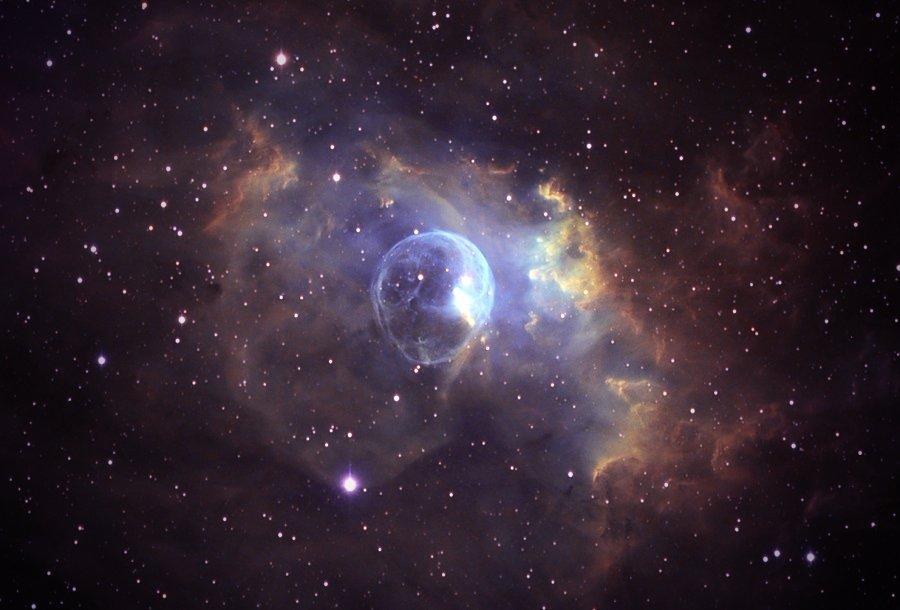
Space Bubble


A Sky Watcher Captures Heavenly View From Paradise


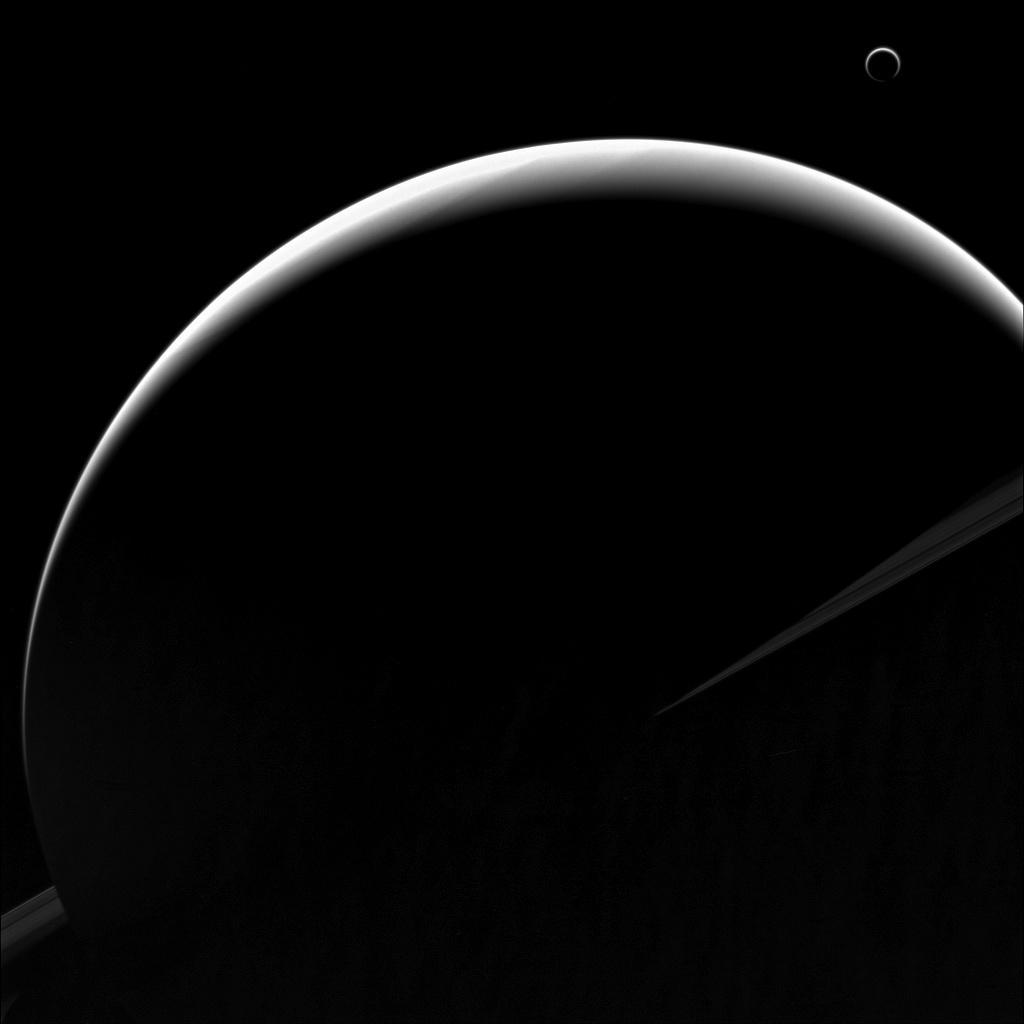
High phase observation of two crescents: Saturn and Titan


Great Picture of the ISON comet


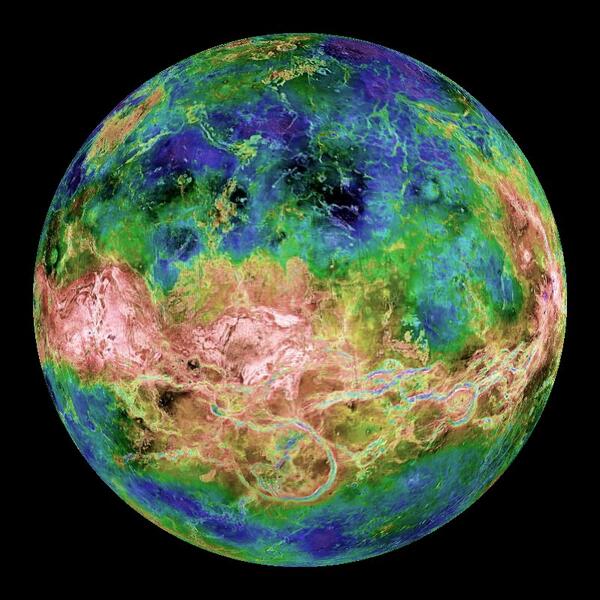
A Gorgeous View of Venus is shown here


Quasar - black hole that is the brightest object in the universe and is thousands of times brighter than the stars in a galaxy combined


Winter moon halo phenomenon in Finland


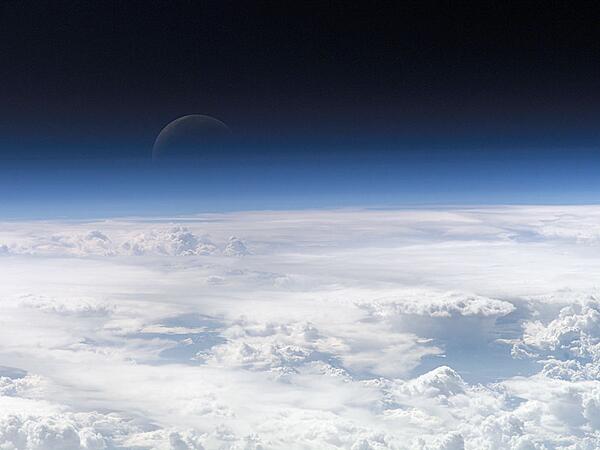
A Blue Crescent Moon from Space


Earth at Night


Earth from Mars


Volcanic eruption view from space


Ring of fire solar eclipse

Credit: NASA / Space.com

Monday, August 20, 2018

Coinbase Goes Live: USA Cryptocurrency Trading

October 14, 2018 by Jen 


Coinbase.com Rolls Out Immediate Trading and Higher Default Limits

Coinbase just rolled out an update that will let you immediately trade cryptocurrency that you’ve purchased on Coinbase.com or the Coinbase app. Now you’ll be able to immediately sell funds to hold in your USD wallet or to purchase cryptocurrency on Coinbase. While purchases and transfers from your bank will be immediately available for trade on Coinbase, they will continue to hold an amount equivalent to your purchase for a period of time disclosed on the purchase screen before you can withdraw or send the funds from Coinbase. 

Cryptocurrency traders around the world buy and sell different crypto's for profit every day.
Live digital asset trading can be done on a variety of exchanges; a few of the best are Bittrex Coinbase or Stex for beginners.

Sunday, August 19, 2018

Sign Up With Genesis Cloud Mining

October 14, 2018 by Jen 


Over time Genesis Cloud Mining grows larger and the designs of their new data centers come with newly gained foresight from knowledge gained about cloud mining along the way. Genesis has made new improvements to data center designs that help reduce the need for manual labor, cooling systems, and new ideas to make the overall process more profitable. It took a lot of work to design better performance mining systems and data centers and the genesis team has carefully broken down every component that goes into mining.


Top Data Center Facility Improvements

Radiant is the new technology that makes Genesis the market leader.


Supply Chains - Miners and Power Units - Cooling Systems 

Farm Management Solutions - The Genesis Hive


Genesis Is Located In Sweden & Iceland


Genesis has reimagined what the perfect mining solution would look like and finally after thousands of man hours, the solution is ready. Genesis Mining Centers are now located in Iceland and Sweden. They are designed from the ground up to harness natural energy and cooling power with geothermal and hydroelectric energy. These mining centers are designed with enhanced airflow management powered by thermal dynamics, these systems work for efficient air cooling throughout these new data centers.


What benefits Genesis Customers?


Our findings indicate that the basic costs of mining equipment and use have been significantly reduced by newly designed mining centers. Allowing for more profits and increased payouts to mining customers than previous crypto contracts offered by Genesis  

Genesis is now presenting a very appealing leading edge over other comparative providers to deliver better results and compete in the cloud mining industry. Live digital asset trading can be done on a variety of exchanges, a few of the best are binance, Coinbase or Stex for beginners.


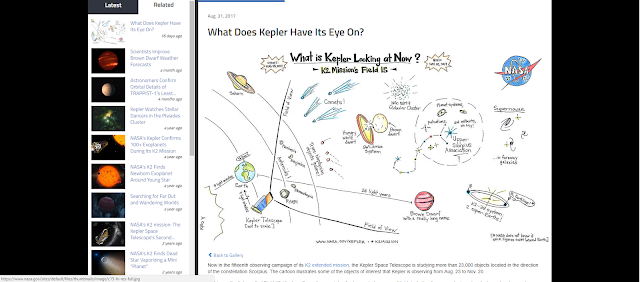
Take a look at what K2 is watching today!


New Generations of Planet Hunters and Volunteers are
Needed Today!


A Sunny Outlook For K2

Sign Up at PlanetHunters.orghttp://www.nasa.gov/kepler/a-sunny-outlook-for-nasa-keplers-second-light/#.UvEu-_ldV8G

Friday, September 30, 2016

Python Scripting Language for Linux, Mac, and Windows Operating Systems


Python for Linux

Welcome! Are you completely new to programming? If not then you will be looking for information about why and how to get started with Python. Fortunately an experienced programmer in any programming language (whatever it may be) can pick up Python very quickly. It's also easy for beginners to use and learn, so jump in!

Python is and extremely flexible programming language that is compatible with almost every other language, it can be used in addition or to wrap other coding into it. If there are certain features you might want to use that are not available on your distro’s package. You can easily compile the latest version of Python from source. In the event that Python doesn’t come pre-installed and isn’t in the repositories as well, you can easily make packages for your own distro.

Installing Python is generally easy, and nowadays many Linux and UNIX distributions include a recent Python. Even some Windows computers (notably those from HP) now come with Python already installed. If you do need to install Python and aren't confident about the task you can find a few notes on the BeginnersGuide/Download wiki page

Before getting started, you may want to find out which IDEs and text editors are tailored to make Python editing easy, browse the list of introductory books, or look at code samples that you might find helpful.


There is a list of tutorials suitable for experienced programmers on the BeginnersGuide/Tutorials page. There is also a list of resources in other languages which might be useful if English is not your first language.The online documentation is your first port of call for definitive information. There is a fairly brief tutorial that gives you basic information about the language and gets you started. You can follow this by looking at the library reference for a full description of Python's many libraries and the language reference for a complete (though somewhat dry) explanation of Python's syntax. If you are looking for common Python recipes and patterns, you can browse the ActiveState Python Cookbook


Best Python How To's


New Details on 55 Cancari e


Astronomers now have some details of an 
exotic nearby alien planet 

The exoplanet, called 55 Cancri e is 60 percent larger in diameter than Earth but eight times as massive research has revealed. That makes this alien world the densest solid planet known. NASA's infrared Spitzer Space Telescope spotted light from the alien planet 55 Cancri e which orbits in a nearby solar system 41 light yrs away. 


Until now scientists have never managed to detect the infrared light from the super-Earth world. Spitzer program scientist Bill Danch of NASA headquarters in Washington in a statement "The spacecraft is pioneering the study of atmospheres of distant planets and paving the way for NASA's upcoming James Webb Space Telescope to apply a similar technique on potentially habitable planets." 

Spitzer first detected infrared light from an alien planet in 2005. But that world was a hot Jupiter a gas giant planet much larger than 55 Cancri e that orbited extremely close to its parent star. Spitzer's view of the 55 Cancri e is the first time the light from a rocky Super-Earth type planet has been seen, researchers said. Since the discovery of 55 Cancri e, astronomers have pinned down increasingly strange features about the planet. The researchers already knew it was part of an alien solar system containing five exoplanets centered on the star 55 Cancri in the constellation Cancer (The Crab). 


Saturday, March 30, 2013

Biggest Cyber Attack in History Slows Down Internet


If your wondering why your net isn't as speedy today, it's not all your providers fault. The conflict ongoing for a week now has been between a non-profit group called Spamhaus and a dutch webhost Cyberbunker.

In March 2013 Spamhaus added Cyberbunker to a blacklist claiming that they host spam websites. This was the catalyst to the biggest cyber attack in history. Shortly afterwards a distributed denial of service (DDoS) attack of previously unreported scale (peaking at 300 gigabites per second; an average large scale attack might reach 50 Gbps, and the largest previously publicly reported was 100 Gbps) was launched against Spamhuas's Domain Name System (DNS) servers exploiting a known vulnerability of DN.

After a week of cyber attacks Spamhuas is still undefeated. Spamhuas operates a number of databases linked to spamming, malware, and nefarious content in order for internet service providers to restrict or block access.

In October 2011 Spamhuas identified Cyberbunker as providing hosting for spammers and contacted thier upstream provider A2B, asking that service their be cancelled. A2B initially refused, blocking only a single IP address linked to spamming. Spamhuas responded by blacklisting all of A2B address space. A2B capitulated, dropped Cyberbunker and then filed complaints with the Dutch police for extortion.

Cyberbunker has a long history of run-ins with the law. It was also host of the infamous Russian Business Network cyber crime gang broken up by the FBI and other law enforcement agencies.

Sunday, November 4, 2012

NASA Amazing Views In Space: NGC 2903 and Omega Nebula as never seen before


NGC 2903 is a beautiful spiral galaxy. Yellowish stars are older, the spiral arms have younger stars that are blue and star forming regions have red-light emissions

Credit: Canada France Hawaii Telescope Coelum 


A colorful collection of 100,000 stars are displayed in this small region inside the Omega Centauri globular cluster, a dense group of nearly 10 million stars. Omega Centauri is one of the biggest star clusters in the Milky Way.

Credit: NASA, ESA, and the Hubble SM4 ERO Team


Globular cluster Messier 70 experienced a cor collapse in the past meaning that even more stars squeeze into the object's core than usual. The brightness of the cluster increases steadily towards it\s center. Messier 70 orbits close to the center of the Milky Way Galaxy, about 30,000 light years away from the solar system. 

Credit: ESA HUBBLE NASA


Mysteriously Bright Black Holes Revealed by NASA Telescope
Snapped a new view of two oddball black holes shining ultra-bright in X-ray light in a distant spiral galaxy. NASA’s NuSTAR X-ray observatory spotted the bright black holes while observing the galaxy Caldwell 5.

Credit: NASA/ JPL-Caltech/ DSSA NASA


Messier 83 of NGC 5236 located in the southern constellation Hydra. This is a beautiful photo of the central region taken by La Silla Observatory, Chile. About 15 million light-years away this spiral structure resembles that of the Milky Way Galaxy in which we live, but Messier 83 also has a bar like center.

Credit: ESO


Neat Light Casting Pic

IRAS 05437+2502, has a small star-forming region filled with dark dust that was first noted in images taken by IRAS satellite in infra-red light in 1983. This recently released image from the Hubble Space Telescope shows many new details, but has not uncovered a clear cause of the bright sharp arc.

Credit: NASA ESA JPL


NGC 5189
The remains of a dying star are seem creating a dramatic work of art.
Credit: NASA ESA JPL


Stuck inside a cloud

A pre-stellar cloud found to contain water vapor in an amount 2000 times larger than all the earths oceans.

ESA's Herschel space observatory detected water vapor in a molecular cloud on the verge of star formation for the first time in this image of Lynds 1544, lower left. 450 Light-Years from earth lying in the Taurus Molecular Cloud, one of our nearest areas of mass star formation.

Credit: ESA HERSCHEL SPIRE


NGC 7008

Found by the Fera's at the Eagle Ridge Observatory California


NGC 1569

A Black hole is spotted in the middle of this cosmic storm.